
“Final Girl” Isn’t as Old as You Think. A Viking Scholar Coined It in 1987.
The most load-bearing term in slasher fandom came from a Berkeley professor of Old Norse sagas — and what she actually argued is stranger and better than the checklist it became.
Allen Erwin·Hellbound Hearts·September 6, 2026·6 min readThere's a phrase you know. You've used it. Your friends use it. Podcasts use it, YouTube essayists use it, movie marketing uses it, and at this point there are entire films named after it. "Final Girl" feels like it came down to us with the drive-in itself — a term as old as Laurie Strode's babysitting money, coined by no one, existing always.
It has an author. It has a publication date. It has, God help us, a DOI number.
The term "Final Girl" was coined in 1987 — three years after Nancy Thompson pulled Freddy into the waking world, nine years after Laurie hid in the closet — by a University of California, Berkeley professor named Carol J. Clover, in an academic essay called "Her Body, Himself: Gender in the Slasher Film," published in a scholarly journal, in a special issue on misogyny.
And here is the detail I need you to sit with, because it's my favorite fact in all of horror scholarship: Carol Clover's actual academic specialty is medieval Scandinavian literature. Old Norse-Icelandic sagas. Vikings. The most load-bearing term in slasher fandom — the word we use for Laurie and Sally and Nancy and Sidney — came from a woman whose day job was a thousand years of Icelandic feud narratives, and who happened to look at The Texas Chain Saw Massacre and see something nobody in respectable film criticism would lower themselves to look at.
I am not making any of this up. The call was coming from inside the university.
What She Actually Said (It's Not the Checklist)
Ask a horror fan to define the Final Girl and you'll get the checklist: the smart one, the careful one, the one who doesn't drink or sneak off with her boyfriend, the one still standing at the end. Virgin, vigilant, survives.
That checklist is not Clover. That checklist is mostly Randy from Scream — a movie's affectionate flattening of her idea, delivered as party rules, nine years after the essay. What Clover actually argued was stranger and better, and it wasn't about the characters at all.
It was about the camera. And about you.
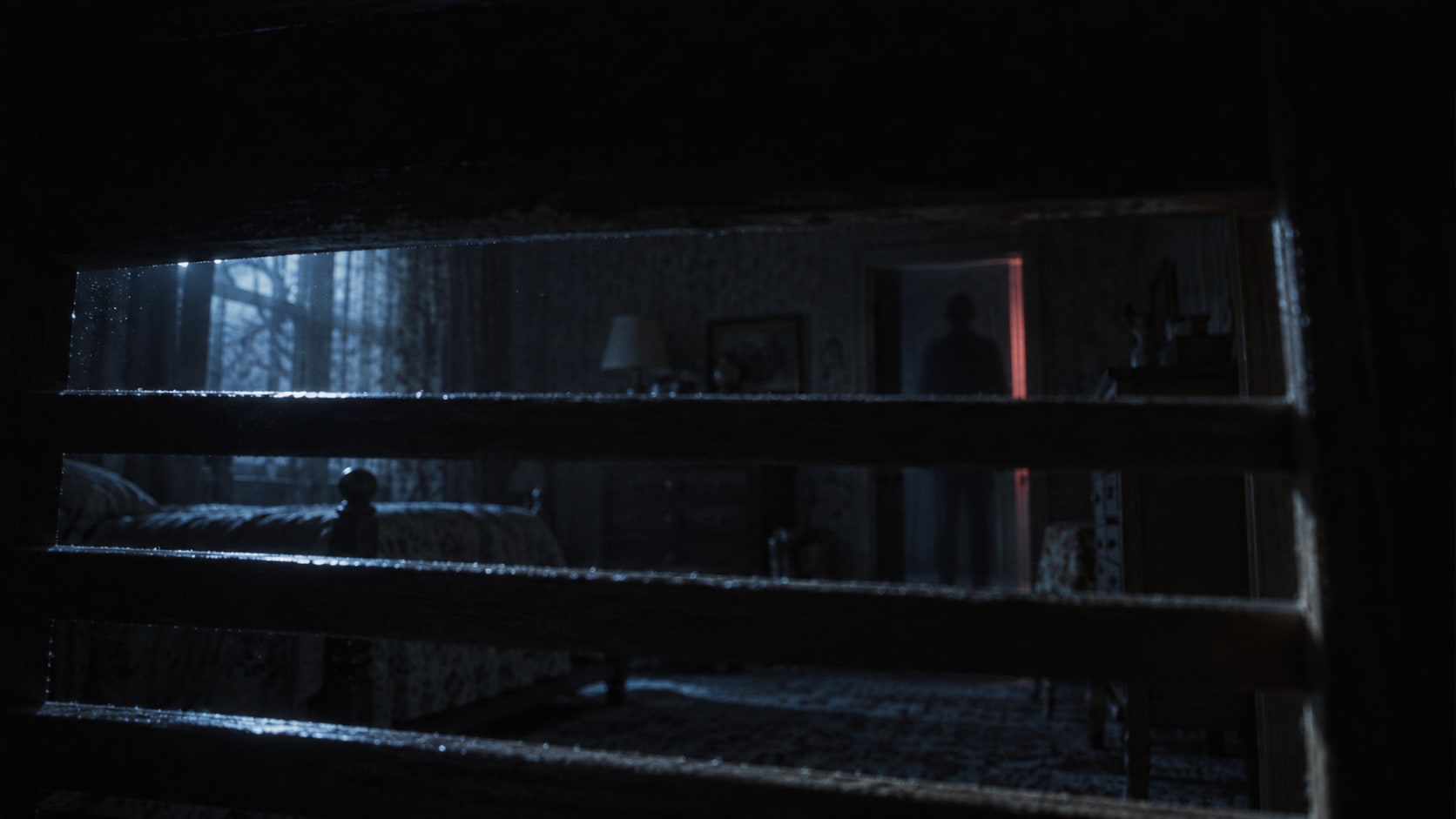
Clover noticed that slashers run a bait-and-switch on their own audience. In the early stretch of these films, the camera keeps putting you behind the killer's eyes — the prowling first-person shots, the breathing, the view through the mask. You start the movie riding along with the monster. But by the climax, the point of view has fully migrated: now you're inside the closet with her, watching the blade come through the slats with her eyes, in the car as the knife punches through the roof. The film has smuggled you out of the killer and into the girl.
Which means — and this was the radioactive part in 1987 — that a slasher's core audience of teenage boys spends the most intense stretch of the movie identifying, completely, with a terrified young woman fighting for her life. The genre everyone wrote off as woman-hating trash was, mechanically, a machine for making boys live inside a woman's fear. Clover called her "abject terror personified" — and noted that she's also the only character who gets to look death in the face and come back.
What She Didn't Say
Here's the nuance that gets sanded off in every listicle, and honoring it is the difference between knowing the term and knowing the idea.
Clover was not throwing a feminist victory parade. She was ambivalent about her own discovery — she called the Final Girl a victim-hero, with the emphasis swinging both ways, and argued the character functions as a kind of stand-in the male audience can suffer through safely: boyish, practical, watchful, sexually reluctant, frequently carrying a name that could go either way. Laurie. Stevie. Stretch. Max. In Clover's reading, the Final Girl wasn't proof that slashers secretly loved women. She was the costume male terror wears.
You don't have to agree with every inch of that — plenty of scholars since haven't, and the franchises themselves have spent thirty years complicating it. But that's the actual argument. Not "the last girl alive is special." Something pricklier: the slasher forces an identification most of its audience would never consciously choose, and the Final Girl is the mechanism.
Then the Diagnosis Escaped the Lab
Now the part that makes this a Hellbound Hearts story, because if you've been reading this site, you already know my favorite subject: what happens when a description of a thing gets loose and starts rewriting the thing it described.
Clover was doing diagnosis. She watched the slashers that already existed — Texas Chain Saw, Halloween, the great grubby wave of the early eighties — and named a pattern the filmmakers had built by instinct. She wasn't writing a recipe.
Hollywood read it as a recipe.
Filmmakers picked up the term. Screenwriters started writing to the pattern instead of stumbling into it. By 1996, Scream put the rules directly into a character's mouth as text — the diagnosis was now dialogue. Then came the full ouroboros: movies literally titled Final Girl and The Final Girls, trailers cutting to the archetype, marketing departments selling it, and a generation of horror built specifically to invoke, subvert, or eulogize a term from a 1987 academic journal. When Laurie Strode came back in 2018 as a hardened survivalist grandmother, the movie wasn't just continuing Halloween — it was arguing with forty years of what "Final Girl" had come to mean. The observation became the instruction became the tradition became the thing to overthrow.
A Berkeley Viking scholar described a pattern, and the pattern read the description and evolved. Stull got its legend from a student newspaper. Lizzie got her verdict from a playground rhyme. The slasher got its soul named by a medievalist, and then started performing the name.
Clover wasn't writing a recipe. Hollywood read it as one. The diagnosis became the blueprint became the tradition became the thing to overthrow.
The Genre Said Thank You
One last thing, because it's the ending this story deserves. In 1987, slasher films sat so far below the salt that — as Clover herself pointed out in the original essay — mainstream outlets barely reviewed them at all, leaving the beat to Joe Bob Briggs, the gleefully lowbrow drive-in critic character, breast-and-blood counts and all. The academy wouldn't touch these movies. The papers wouldn't touch these movies. A saga scholar took them seriously when almost nobody with credentials would.
And horror noticed. When Men, Women, and Chain Saws — the 1992 book that expanded the essay — came out, it won the Bram Stoker Award for Best Non-Fiction. The horror community took a look at the Berkeley professor who'd treated its trashiest, most disreputable subgenre as something worth thinking hard about, and gave her its own highest honor. The genre knows its friends.
So. The floor is open, and you know the question, because it's been the question at every sleepover and convention table for four decades: who is the greatest Final Girl in horror history — and what makes her more than just the last one standing? Laurie has the legacy. Nancy went on offense first. Sally survived the most with the least. Sidney's been doing it for thirty years. Make your case in the forums. Clover gave us the word. The argument is ours.
Horror doesn't stop when the article ends.
Get your Scare Score. Talk to Hex. Take the horror quiz. Join a community that lives and breathes horror.
The Lizzie Borden Rhyme Gets Every Single Fact Wrong
"Forty whacks" was eighteen or nineteen. The axe was a hatchet. Her mother was her stepmother. And America's most famous axe murderer was acquitted in ninety minutes. On the anniversary of the Borden murders, an audit of the most successful wrong poem in American history.
I Jumped Through the Portal to Hell in Stull, Kansas. Here's What I Found.
Kansas's "Gateway to Hell" traces to a 1974 college newspaper article, and its most famous proof cites a Time magazine story that doesn't exist. I know all this now. I did not know it when I jumped through the church window at 1 a.m.
HELLBOUND HEARTS — hellboundhearts.com